
Technical SEO Services To Build A Stronger Search Foundation
Your website can have great content and still struggle in search if search engines cannot efficiently crawl, understand, or index important pages.
I help businesses identify and resolve technical SEO problems affecting crawlability, indexing, site architecture, page experience, structured data, internal linking, and search visibility.
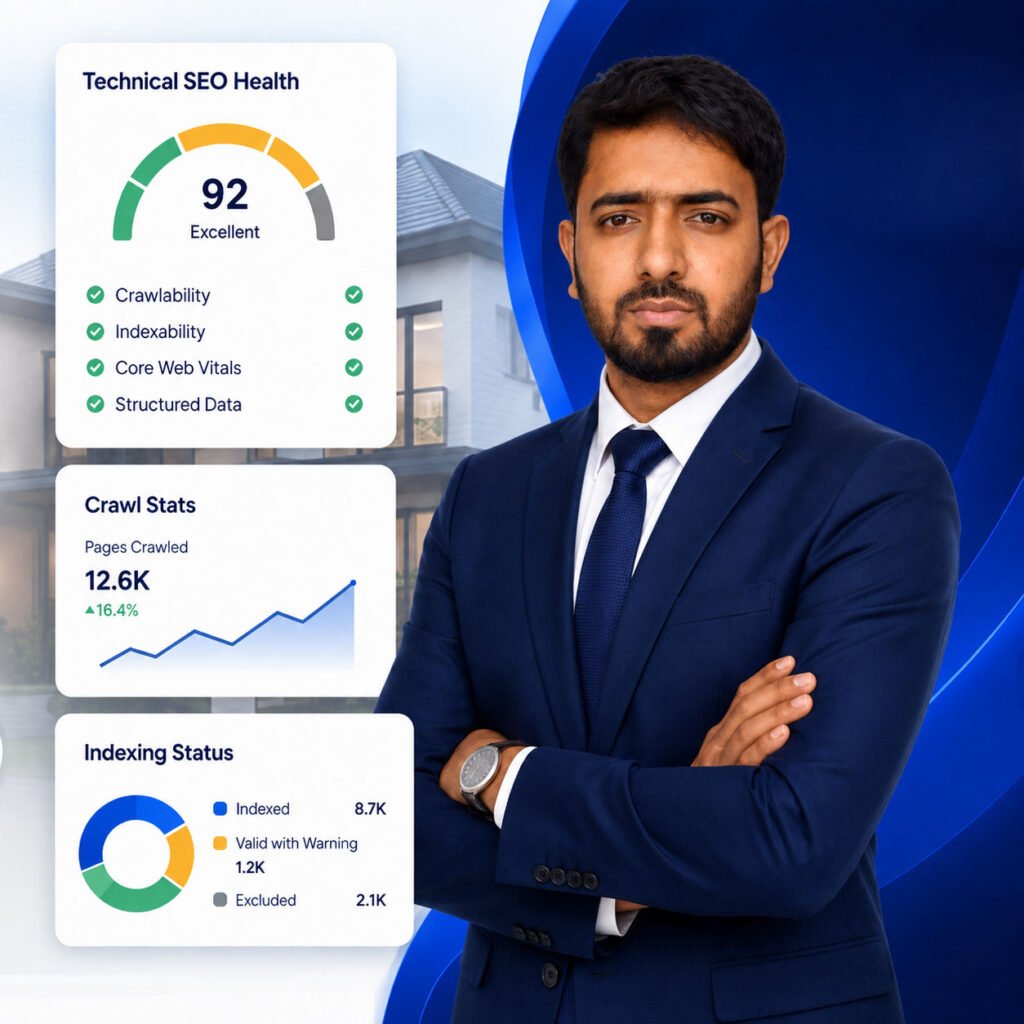
Get Your Technical SEO Solutions From Rubel Ahmed
What is Technical SEO?
Technical SEO is the process of improving the technical foundation of a website so search engines can access, crawl, understand, and index its important content.
Google’s basic technical requirements include allowing Googlebot to access the page, serving a working page, and providing indexable content. Meeting those requirements makes a page eligible for indexing, although Google does not guarantee that every eligible page will be indexed.
Technical SEO can involve:
- Crawling
- Indexing
- Site architecture
- URL structure
- XML sitemaps
- Robots.txt
- Canonicalization
- Redirects
- Internal linking
- Mobile usability
- Page experience
- Core Web Vitals
- Structured data
- JavaScript SEO
- Duplicate content
- Website migrations
Why is Technical SEO Important?
A Strong Website Foundation Supports Your SEO Strategy
Technical SEO doesn’t replace good content.
Instead, it helps make your important content accessible and understandable to search engines.
Without a strong technical foundation, you may experience:
Pages not being indexed: Important URLs may not appear in Google.
Crawling problems: Search engines may have difficulty discovering important pages.
Duplicate URLs: Multiple URLs may represent the same or very similar content.
Slow or unstable pages: Poor page experience can affect users and conversions.
Weak website architecture:Important pages may be buried too deeply within the site.
Migration problems:Changing domains, platforms, URLs, or site architecture without proper planning can cause organic visibility losses.
Main Services Section
My Technical SEO Services
A Complete Technical SEO Strategy For Your Website
Find The Technical Problems Affecting Your Website
I review your website’s technical foundation and prioritize issues based on their potential impact.
Audit areas include:
- Crawlability
- Indexability
- HTTP status codes
- Redirects
- Canonical tags
- XML sitemap
- Robots.txt
- URL structure
- Internal links
- Duplicate content
- Mobile usability
- Page experience
- Structured data
- JavaScript rendering
Help Search Engines Discover Your Important Pages
I analyze whether search engines can efficiently access the pages you want indexed.
I check:
- Robots.txt
- Noindex directives
- Canonical signals
- XML sitemaps
- Orphan pages
- Crawl errors
- Internal links
- Status codes
- Crawl paths
Google recommends using Search Console’s Page Indexing and Crawl Stats reports alongside URL Inspection when investigating accessibility and indexing issues
XML Sitemap Optimization
Help Search Engines Discover Important URLs
I review:
- Sitemap availability
- Sitemap accuracy
- Indexability of listed URLs
- Last modification information
- Sitemap organization
- Search Console submission
A sitemap should help search engines discover the URLs that matter—not become a list of every URL generated by your CMS.
Google specifically describes sitemaps as a way to tell Google about pages that are new or updated.
Control Crawler Access Correctly
I review your robots.txt configuration for unintended restrictions.
Common checks include:
- Blocked resources
- Important pages accidentally disallowed
- Crawl directives
- Sitemap reference
- CMS-generated rules
Create A Clear Structure For Users & Search Engines
I analyze how your pages connect.
A strong structure can make it easier to understand relationships such as:
Homepage → Service → Sub-Service → Supporting Content
For example:
SEO Services
URL Structure Optimization
Create Clean, Logical URLs
I review:
- URL length
- Unnecessary parameters
- Duplicate URLs
- URL hierarchy
- Trailing slash consistency
- Case sensitivity
- Redirects
- Keyword relevance
Canonicalization
Help Search Engines Understand The Preferred URL
Canonical issues can occur when similar content is accessible through multiple URLs.
I review:
- Canonical tags
- Self-referencing canonicals
- Cross-domain canonicals
- Parameter URLs
- Duplicate pages
- Pagination and filtering scenarios
The goal is to make your preferred URL signals consistent.
Fix Broken Paths And Unnecessary Redirects
I analyze:
- 404 errors
- 301 redirects
- 302 redirects
- Redirect chains
- Redirect loops
- Soft 404 situations
- Broken internal links
For migrations, redirects should preserve relevant URL relationships wherever appropriate.
Improve Technical User Experience
Core Web Vitals measure real-world loading performance, responsiveness, and visual stability.
The current Core Web Vitals metrics are:
Optimization can include:
- Image optimization
- Script optimization
- CSS optimization
- Font loading
- Lazy loading
- Caching
- Reducing layout shifts
- Improving server response
Make Your Website Work Well Across Devices
I review:
- Responsive layouts
- Mobile navigation
- Text readability
- Interactive elements
- Viewport configuration
- Mobile page speed
- Content consistency
A technically strong desktop website isn’t enough if the mobile experience is poor.
Make Important Content Accessible
JavaScript-heavy websites can create additional SEO considerations.
I investigate:
- Rendered HTML
- Client-side navigation
- JavaScript-generated content
- Links
- Lazy-loaded content
- Rendering issues
- Indexability
Help Search Engines Understand Your Content
Where appropriate, I review structured data such as:
- Organization
- Person
- LocalBusiness
- Service
- Product
- Article
- Breadcrumb
- FAQ
Reduce Confusion Around Similar URLs
I investigate duplicate and near-duplicate content caused by:
- URL parameters
- Filters
- Tags
- Archives
- HTTP/HTTPS variations
- WWW/non-WWW versions
- Product variations
- CMS-generated pages
Solutions may involve:
- Canonicals
- Redirects
- Internal linking
- Content consolidation
- Indexation controls
Protect Organic Visibility During A Website Migration
Website migrations can involve:
- Domain changes
- Platform changes
- URL changes
- Redesigns
- HTTPS migrations
- CMS migrations
I can help create a migration checklist covering:
Before Migration
- URL inventory
- Ranking data
- Traffic data
- Redirect mapping
- Technical baseline
Solve The Technical Challenges Of Large Product Websites
Ecommerce websites can generate thousands of URLs.
I analyze:
- Product URLs
- Category pages
- Filters
- Faceted navigation
- Pagination
- Product variants
- Duplicate pages
- Internal linking
- Product structured data
- XML sitemaps
This is particularly important for WooCommerce and Shopify websites.
Technical SEO For Different Websites
Local Business Websites
Focus on:
- Crawlability
- Local landing pages
- Internal linking
- Structured data
- Mobile experience
- Google Business Profile integration
Ecommerce Websites
Focus on:
- Products
- Categories
- Filters
- Faceted navigation
- Product schema
- Large-scale indexing
WordPress Websites
Focus on:
- Plugin-generated URLs
- Taxonomies
- Archives
- Duplicate content
- Performance
- Sitemap configuration
Shopify Websites
Focus on:
- Collections
- Product URLs
- Canonicals
- Duplicate paths
- Internal linking
- Technical limitations
My Technical SEO Process
A Practical 6-Step Approach
1
Discovery
Website,Platform, Business model, SEO goals,Target audience
2
Technical Crawl
Analyze the site’s technical structure and important URLs.
3
Search Engine Analysis
Indexing, Crawlability, Search Console data, Sitemap, Robots.txt
4
Prioritization
Classify issues as:
Critical → High → Medium → Low
5
Implementation
Fix or provide implementation guidance for the highest-priority issues.
6
Review & Monitoring
Indexing, Crawling, Organic visibility, Page experience,Technical errors
Why Choose Rubel Ahmed For Technical SEO?
Technical SEO With A Business-Focused Approach
Not Just A Checklist
I don’t believe technical SEO should mean finding hundreds of minor warnings and calling them “SEO problems.”
I focus on issues that can actually affect:
Crawling → Indexing → Search Visibility → User Experience → Conversions
Clear Recommendations
Instead of confusing technical terminology, I explain:
- What is wrong?
- Why does it matter?
- How should it be fixed?
- What should be fixed first?
SEO + AI Search Understanding
Technical SEO forms part of a broader search strategy that also considers content structure, entities, internal linking, structured data, and helpful information.

10+
SEO Project
10+
Happy Clints
+
Organic Traffic Generate
Top Ranking
Across Copititive Ketwords
Technical SEO + AEO
Make Important Answers Easy To Discover
Technical SEO supports Answer Engine Optimization by ensuring important content can be discovered and accessed.
I combine technical foundations with:
- Question-based content
- Clear headings
- Concise answers
- Internal links
- Structured information
- Relevant schema
- Strong entity relationships
The objective is not to create content specifically for a bot.
The objective is to make useful information easy for both people and search systems to access and understand.
Technical + AI Search Visibility
Build A Search Foundation For Modern Search
AI-powered search experiences still depend heavily on accessible, understandable, useful web content.
Google’s documentation says its AI search features use the same foundational SEO practices required for traditional Search; there is no separate special technical requirement for appearing in AI Overviews or AI Mode.
Your technical foundation should therefore support:
Crawlability
- Indexability
- Clear Content
- Entity Understanding
- Helpful Answers
- Search Visibility
What You Receive
Depending on your project, deliverables can include:
- Technical SEO audit
- Crawl analysis
- Indexing analysis
- Sitemap review
- Robots.txt review
- Canonical analysis
- Redirect analysis
- URL structure review
- Internal linking analysis
- Site architecture recommendations
- Core Web Vitals review
- Mobile SEO review
- Structured data review
- Duplicate content analysis
- JavaScript SEO review
- Migration recommendations
- Priority action plan
What does a Technical SEO audit include?
It can include crawlability, indexing, sitemaps, robots.txt, canonicalization, redirects, URLs, internal links, site architecture, performance, mobile usability, and structured data.
Why is On-Page SEO important?
It helps search engines understand your pages while making the content easier for users to navigate and understand.
Can Technical SEO improve Google rankings?
Fixing technical problems can remove barriers to crawling, indexing, and page experience, but no SEO service can guarantee a specific ranking position.
Is Technical SEO different from On-Page SEO?
Yes. Technical SEO focuses primarily on the website’s infrastructure and search accessibility, while On-Page SEO focuses more on page content and elements such as titles, headings, keywords, and internal links.
What are Core Web Vitals?
Core Web Vitals are Google’s metrics for loading performance, responsiveness, and visual stability: LCP, INP, and CLS.
Can Technical SEO fix indexing problems?
Technical SEO can identify and address issues that prevent or complicate crawling and indexing, but fixing an issue does not guarantee that Google will index a particular URL.
Do you optimize WooCommerce websites?
Yes. WooCommerce optimization can address product pages, images, plugins, caching, cart functionality, checkout, and server performance.
Do you provide Technical SEO for ecommerce websites?
Yes. Ecommerce technical SEO can address product URLs, categories, filters, duplicate pages, internal linking, structured data, and large-scale indexing issues.