



Local SEO vs Traditional SEO: Which One Is Right for Your Business?

In today’s digital landscape, visibility on search engines can make or break a business. Whether you run a small local shop or an online brand serving customers nationwide, search engine optimization (SEO) plays a crucial role in driving traffic, leads, and sales.

But one common question business owners ask is:

Should I invest in Local SEO or Traditional SEO?

The answer depends on your business model, target audience, and long-term growth strategy. In this comprehensive guide, we’ll break down the differences between Local SEO and Traditional SEO, their benefits, and how to determine which one is right for your business.

What is Local SEO?

Local SEO (Local Search Engine Optimization) is the process of optimizing your online presence to attract customers from a specific geographic area. It focuses on improving visibility in local search results, particularly in Google Maps and the local “3-pack” listings.

For example, when someone searches for:

  • “Dentist near me”
  • “Best pizza in New York”
  • “Plumber in Chicago”

Search engines display location-based results. Local SEO ensures your business appears in those searches.

Key Components of Local SEO

  • Google Business Profile Optimization
    Claiming and optimizing your Google Business Profile is essential. It helps your business appear in Google Maps and local search results.
  • NAP Consistency (Name, Address, Phone Number)
    Your business details must be consistent across directories, social media, and websites.
  • Customer Reviews
    Reviews influence rankings and build trust. Businesses with more positive reviews often rank higher in local search results.
  • Local Citations
    Listings in directories like Yelp, Yellow Pages, and local business websites help search engines verify your business information.

Location-Based Keywords
Using keywords like “SEO agency in Miami” instead of just “SEO agency” helps target local search intent.

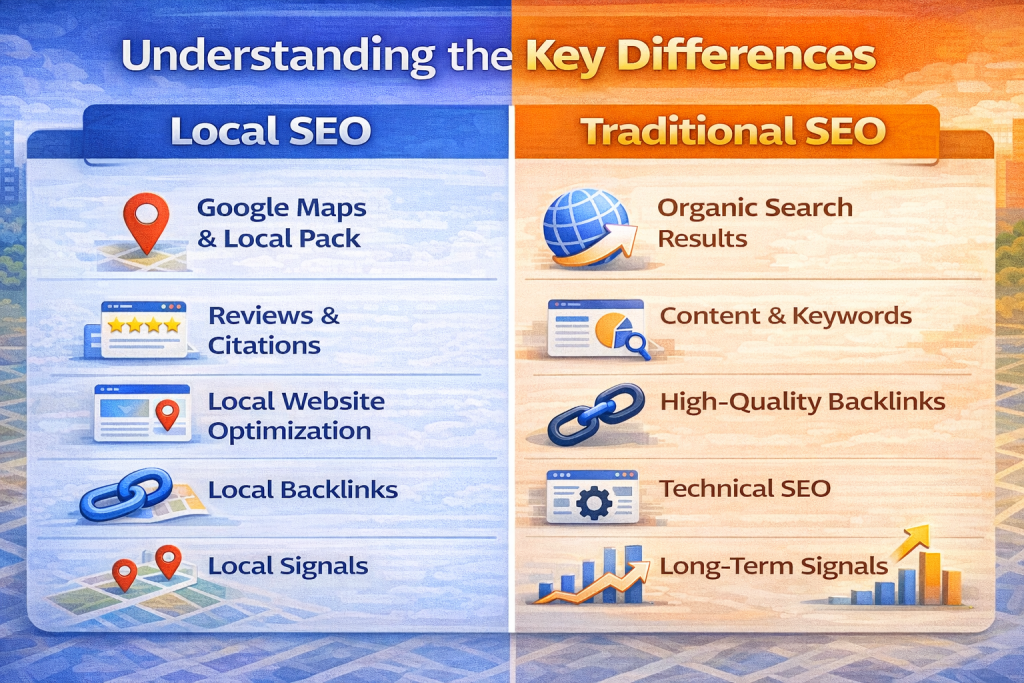
Difference between local and traditional SEO Local search optimization Traditional SEO strategy Google Maps ranking Organic SEO benefits

What is Traditional SEO?

Traditional SEO (also known as organic or national SEO) focuses on improving your website’s visibility in broader search results without geographic limitations.

It targets keywords that are not tied to a specific location. For example:

  • “Best CRM software”
  • “Digital marketing tips”
  • “Buy running shoes online”

Traditional SEO aims to rank your website in organic search results for users across a region, country, or even globally.

Key Components of Traditional SEO

  • Keyword Research and Optimization
    Identifying high-volume, relevant keywords and optimizing content accordingly.
  • Content Marketing
    Creating blogs, guides, landing pages, and resources that provide value and rank for search queries.
  • Backlink Building
    Earning links from authoritative websites to increase domain authority.
  • Technical SEO
    Improving site speed, mobile responsiveness, indexing, and crawlability.
  • On-Page Optimization
    Optimizing titles, meta descriptions, headings, and internal links.

Core Differences Between Local SEO and Traditional SEO

Although both strategies aim to improve visibility, they differ significantly in focus and execution.

1. Target Audience

  • Local SEO: Targets customers in a specific geographic area.
  • Traditional SEO: Targets a broader audience without location limits.

If your customers physically visit your store, Local SEO is critical. If you operate an online business serving nationwide clients, Traditional SEO is more suitable.

2. Search Intent

Local searches typically show high purchase intent. Someone searching for “emergency electrician near me” likely needs immediate service.

Traditional SEO often targets informational or research-based queries, such as “how to improve website traffic.”

3. Ranking Signals

Local SEO relies heavily on:

  • Reviews
  • Proximity to searcher
  • Google Business Profile optimization
  • Citations

Traditional SEO depends more on:

  • Content quality
  • Backlinks
  • Website authority
  • Technical performance

4. Competition Level

Local SEO competition is limited to businesses within a specific area.

Traditional SEO often involves competing against national or international brands with large marketing budgets.

Benefits of Local SEO

For location-based businesses, Local SEO offers significant advantages.

Higher Conversion Rates: Local searches often lead to action. People searching locally are typically ready to call, visit, or purchase.

Increased Google Maps Visibility:Ranking in the local pack increases phone calls, direction requests, and website visits.

Stronger Community Trust: Reviews and local engagement build credibility within your area.

4. Faster Results:Compared to national SEO, Local SEO can sometimes show quicker improvements due to lower competition.

Benefits of Traditional SEO

Traditional SEO provides long-term scalability and broader brand exposure.

National or Global Reach: It allows you to attract customers beyond your immediate location.

Sustainable Traffic Growth: Once your content ranks, it can generate traffic for years.

Brand Authority: High-ranking content positions your business as an industry leader.

Content-Driven Lead Generation: Educational blogs and guides can attract and nurture potential customers.

Which Businesses Should Choose Local SEO?

Local SEO is ideal for:

  • Restaurants
  • Law firms
  • Medical clinics
  • Salons
  • Real estate agents
  • Plumbers and electricians
  • Local marketing agencies

If customers need to visit your location or you provide services within a defined area, Local SEO should be your top priority.

Which Businesses Should Choose Traditional SEO?

Traditional SEO works best for:

  • E-commerce stores
  • SaaS companies
  • Online course creators
  • Affiliate marketers
  • Bloggers
  • National service providers

If your audience is not limited by geography, Traditional SEO offers more growth potential.

Can You Use Both Strategies?

Absolutely. Many businesses benefit from combining Local SEO and Traditional SEO.

For example:

A local fitness center can:

  • Use Local SEO to rank for “gym in Dallas”
  • Use Traditional SEO to publish blog posts about “best workout routines” to attract organic traffic

Similarly, a local law firm can:

  • Rank locally for “divorce lawyer in Chicago”
  • Create informative legal guides that rank nationally

A hybrid approach maximizes visibility, traffic, and revenue.

Common Mistakes to Avoid

Whether you choose Local SEO or Traditional SEO, avoid these mistakes:

  • Ignoring mobile optimization
  • Neglecting customer reviews
  • Inconsistent NAP information
  • Publishing low-quality content
  • Building spam backlinks

SEO is a long-term investment. Shortcuts often lead to penalties and lost rankings.

Final Thoughts

Local SEO and Traditional SEO are not competitors — they are tools designed for different business goals.

Local SEO helps you dominate your geographic market and attract ready-to-buy customers.
Traditional SEO builds long-term authority and drives scalable organic traffic.

The right choice depends on your business structure, target market, and expansion plans.

If you want sustainable growth, understanding the difference between Local SEO and Traditional SEO is the first step toward building a powerful digital marketing strategy.

Leave a Comment

Your email address will not be published. Required fields are marked *