
Keyword Research Services
Successful SEO starts with understanding what your potential customers are searching for, why they are searching, and which pages should target those searches.
My keyword research services can include:
- SEO Keyword Research
- Primary & Secondary Keywords
- Long-Tail Keyword Research
- Search Intent Analysis
- Commercial Keyword Research
- Transactional Keywords
- Informational Keywords
- Competitor Keyword Research
- Keyword Gap Analysis
- SERP Analysis
- Keyword Clustering
- Keyword Mapping
- Keyword Cannibalization Analysis
- Content Gap Research
- Local Keyword Research
- Ecommerce Keyword Research
- Service Keyword Research
- AEO Research
- AI Search Query Research
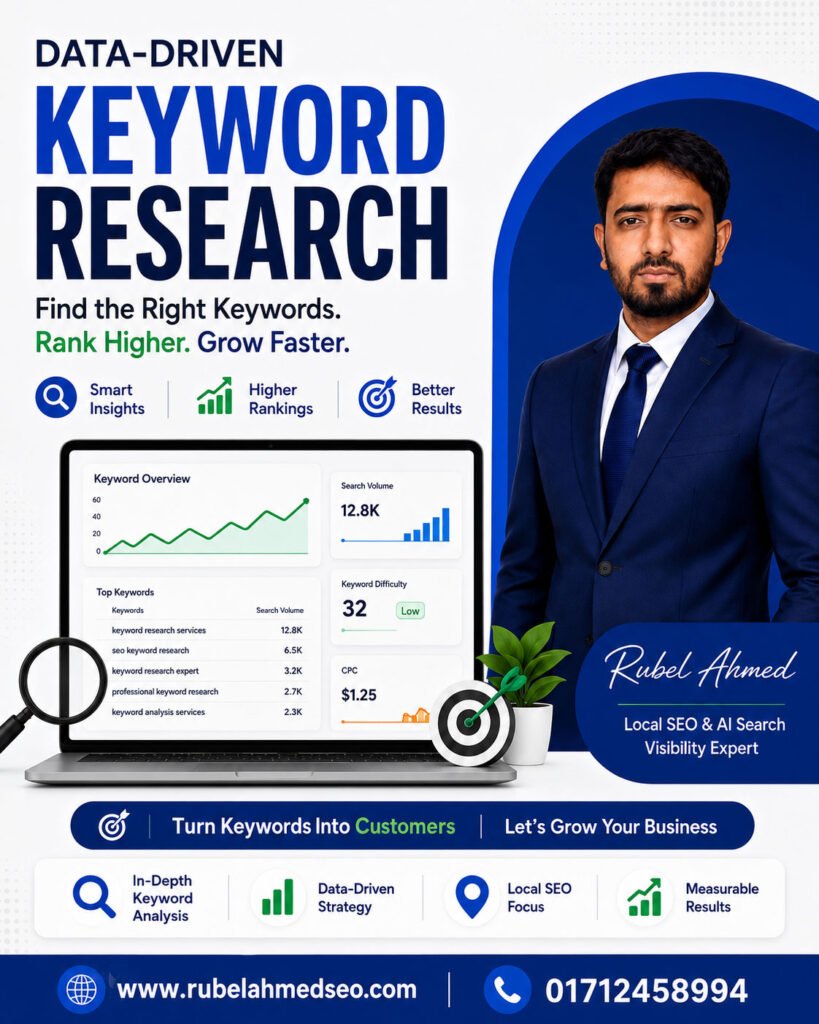
What is Keyword Research?
Keyword research is the process of discovering and analyzing the words, phrases, and questions people use when searching online.
Good keyword research looks beyond search volume.
It considers:
- What people are searching for
- Why they are searching
- Which page type matches the query
- How competitive the search is
- Whether the keyword is relevant to your business
- Where the keyword belongs on your website
- How the topic supports your customer journey
A strong keyword strategy connects:
- Business Goals
- Customer Search Behavior
- Search Intent
- Relevant Keywords
- Keyword Clusters
- Website Pages
- Organic Search Opportunities
Why is Keyword Research Important for SEO?
Reach More Relevant Searchers
More traffic does not automatically mean better SEO.
A keyword should be relevant to:
- Your services
- Your products
- Your audience
- Your location
- Your business objectives
A lower-volume keyword with clear commercial intent may be more valuable than a very broad keyword attracting irrelevant visitors.
Understand Search Intent
- Informational Intent
- Commercial Intent
- Transactional Intent
- Navigational Intent
The user wants a specific website, company, or resource.
Understanding search intent helps determine the right type of page for each keyword.
My Keyword Research Services
Complete SEO Keyword Research & Strategy
Understand Your Business Before Researching Keywords
Keyword research should begin with your business.
I first analyze:
- Services
- Products
- Target customers
- Locations
- Competitors
- Existing website pages
- Current SEO strategy
- Business priorities
This helps filter out keywords that may have search volume but little business relevance
Build the Foundation of Your SEO Strategy
Seed keywords are broad terms related to your business.
For example, an SEO consultant may begin with:
- SEO Services
- Local SEO
- Technical SEO
- Keyword Research
- Ecommerce SEO
These initial topics can then be expanded into more specific keyword opportunities.
Primary Keyword Research
Identify the Main Topic for Each Page
Important landing pages should have a clear primary search topic.
For example:
Page
/keyword-research/
Primary Keyword
Keyword Research Services
The primary keyword helps define the main search intent of the page.
It does not need to be repeated unnaturally throughout the content.
Commercial keywords can indicate that users are researching providers, products, or solutions.
Examples may include:
- Best
- Services
- Expert
- Specialist
- Consultant
- Agency
- Company
- Reviews
- Comparison
Transactional searches often indicate stronger action intent.
Common modifiers include:
- Hire
- Buy
- Order
- Book
- Request
- Get a quote
- Consultation
- Pricing
Informational Keyword
Examples:
- What is keyword research?
- How does Local SEO work?
- How much does SEO cost?
- How can I improve website speed?
- What is keyword cannibalization?
These searches can support:
- Blog posts
- Guides
- FAQs
- Tutorials
- Educational resources
Keyword difficulty should not be judged by one tool score alone.
I consider:
- Competing websites
- Ranking-page relevance
- Search intent
- Content quality
- Website authority
- SERP features
- Business value
The objective is to identify realistic and relevant SEO opportunities.
Supporting Keywords
- SEO Keyword Research
- Professional Keyword Research
- Keyword Research Expert
- Keyword Research Consultant
- Keyword Analysis Services
- SEO Keyword Strategy
When these terms represent similar intent, one comprehensive page may be more appropriate than several nearly identical pages.
Keyword research can identify important topics your website does not yet cover.
These opportunities might include:
- Service pages
- Sub-service pages
- Blog content
- FAQs
- Guides
- Product categories
- Comparison pages
- Location pages
Find Keywords for Service-Based Businesses
Service keyword research can focus on:
- Main services
- Sub-services
- Customer problems
- Solutions
- Industries
- Commercial terms
- Location intent
Research Keywords for Products & Categories
Ecommerce keyword research requires understanding different page types.
- Categories
- Subcategories
- Product pages
- Product attributes
- Brands
- Buying guides
- Comparison content
Build Keyword Targeting Around Shopify Store Structure
For Shopify stores, I can research keywords for:
- Collections
- Products
- Landing pages
- Blog content
- Buying guides
The goal is to avoid unnecessary competition between collection and product pages.
Build a Clear Keyword Strategy for WooCommerce
WooCommerce keyword research can support:
- Product categories
- Products
- Attributes
- Landing pages
- Blog content
- Commercial pages
Keyword mapping should connect naturally with the overall WooCommerce store structure.
Local keyword research focuses specifically on searches connected to locations.
Examples:
- SEO Expert in Bangladesh
- SEO Consultant Dhaka
- Plumber in Dallas
- Mortgage Broker Auckland
Local keyword research may include:
- Service + location keywords
- City keywords
- Area keywords
- Nearby-service intent
- Location-specific commercial searches
Answer Engine Optimization research can identify:
- Customer questions
- Definition searches
- Comparison queries
- Problem-based searches
- How-to searches
- Decision-making questions
These queries can help structure clear answers within:
- FAQs
- Guides
- Service pages
- Product content
- Educational resources
My Keyword Research Process
A Practical 6-Step SEO Strategy
2
Website Analysis
I review:
- Existing pages
- Current topics
- Keyword targeting
- Content structure
- Search visibility
- Keyword overlap
3
Keyword Discovery
I research:
- Primary terms
- Secondary terms
- Long-tail keywords
- Commercial searches
- Informational searches
4
I analyze:
- Search competitors
- Ranking pages
- Search intent
- Keyword gaps
- SERP opportunities
5
Keyword Clustering
Related searches are grouped according to topic and intent.
6
Keyword Mapping
Keyword clusters are mapped to:
- Existing pages
- New pages
- Products
- Categories
- Blog content
Keyword Research Services in Bangladesh
Professional Keyword Research for Bangladeshi Businesses
I provide Keyword Research Services in Bangladesh for businesses targeting local, national, and international customers.
Strategies can support businesses operating in:
- Dhaka
- Chattogram
- Sylhet
- Rajshahi
- Khulna
- Gazipur
- Narayanganj
- Other areas of Bangladesh
Location keywords should only be prioritized when geographic intent genuinely exists.
A nationwide ecommerce store, for example, may need stronger product and category keyword research rather than repeatedly targeting city names.
International Keyword Research
Research Keywords for Multiple Markets
International businesses may need different keyword strategies depending on:
- Country
- Language
- Regional terminology
- Search behavior
- Local competition
- Product demand
- Customer intent
Keyword lists should not simply be translated from one market to another.
Research should reflect how customers actually search in each target market.
Why Choose Rubel Ahmed for Keyword Research?
Keyword Research Focused on Search Intent & Business ValueKeyword Research Focused on Search Intent & Business Value
Technical Shopify SEO
I review:
- Shopify themes
- Apps
- Canonicals
- Sitemap
- Robots.txt
- Indexing
- Structured data
- Performance
Business-Focused Priorities
I prioritize problems based on business importance and potential impact.
Clear Recommendations
- What is wrong?
- Why does it matter?
- Which pages are affected?
- How should it be fixed?
- What should happen first?
No Ranking Guarantees
SEO can improve relevance, technical quality, discoverability, and content, but specific Google rankings cannot be guaranteed.

10+
SEO Project
10+
Happy Clints
+
Organic Traffic Generate
Top Ranking
Across Copititive Ketwords
What You Receive
Depending on project scope, you may receive:
✓ Complete Keyword Research
✓ Primary Keyword Recommendations
✓ Secondary Keywords
✓ Long-Tail Keyword Research
✓ Search Intent Classification
✓ Commercial Keywords
✓ Transactional Keywords
✓ Informational Keywords
✓ Competitor Keyword Analysis
✓ Keyword Gap Analysis
✓ SERP Analysis
✓ Keyword Competition Analysis
✓ Keyword Clusters
✓ Keyword Mapping
✓ Content Gap Opportunities
✓ Service Keyword Research
✓ Ecommerce Keyword Research
✓ Local Keyword Opportunities
✓ Question Keyword Research
✓ AEO Query Opportunities
✓ AI Search Query Opportunities
✓ Recommended Page Types
✓ Content Recommendations
✓ Prioritized Keyword Roadmap
What is keyword research?
Keyword research identifies the words, phrases, and questions people use when searching for products, services, or information online.
Why is keyword research important?
It helps identify relevant search demand, customer intent, content opportunities, and the best topics for individual website pages.
What is search intent?
Search intent explains what a user wants to accomplish, such as learning, comparing options, finding a website, or taking action.
What are long-tail keywords?
Long-tail keywords are more specific search phrases that often reveal clearer customer needs, attributes, questions, or buying intent.
What is keyword clustering?
Keyword clustering groups related searches with similar intent so they can be targeted through one relevant page or topic.
What is keyword mapping?
Keyword mapping assigns keyword groups to specific service pages, product pages, categories, locations, or content.
Do you provide competitor keyword research?
Yes. Competitor keyword research can identify keyword gaps, ranking pages, search intent, and relevant content opportunities.
Do you provide Keyword Research Services in Bangladesh?
Yes. Research can be customized for businesses targeting Bangladesh, local markets, nationwide customers, or international audiences.
Can keyword research guarantee rankings?
No. Rankings depend on content, technical SEO, competition, authority, implementation, and many other factors.